
How to Choose a Security Company for Your Estate: 7 Questions to Ask Before You Sign
3 August 2026
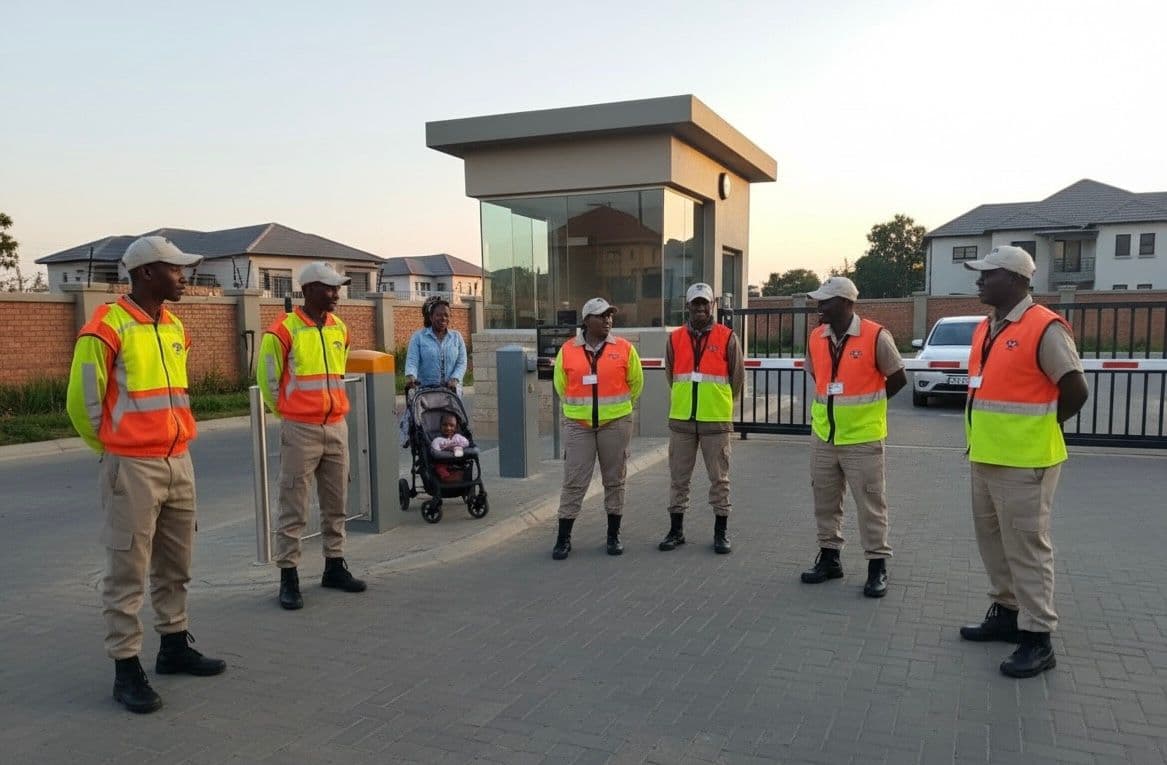
Choosing a security provider for a residential estate is a decision that affects every resident, every day, for years. Yet many estates end up signing with a provider based on price alone, without asking the questions that actually determine whether that provider will still be reliable eighteen months in. Here are seven questions worth asking before you sign anything.
1. Are they PSIRA registered, and can they prove it?
Every legitimate security company in South Africa must be registered with the Private Security Industry Regulatory Authority (PSIRA), and every guard they deploy must hold individual PSIRA certification. Ask for the company's registration number directly, and don't be satisfied with a verbal answer — a provider with nothing to hide will give you the number without hesitation. JBA Security's PSIRA registration number, for example, is displayed on our site and every reference letter we provide.
2. How long have they operated in your specific area?
A provider based two hours away, dispatching guards from a distant depot, will always struggle to match the response times of a provider with local knowledge and a nearby base. Ask where their control room and dispatch actually operate from, not just where their head office is registered.
3. Who manages the guards on your site, and how often?
The difference between a well-run estate and a poorly-run one is rarely the guards themselves — it's the management behind them. Ask how often a supervisor physically visits the site, how incidents are escalated, and who you would actually call if something went wrong at 2am. A provider that can't answer this clearly is one where guards are largely left to run themselves.
4. What does their reporting actually look like?
Ask to see a sample of their daily, weekly or monthly reporting before you sign — not a description of it, an actual example. Reporting that exists only verbally, or only when something goes wrong, makes it very difficult for your trustees or body corporate to hold the provider accountable over time.
5. Are their guards trained specifically for estate environments, not just generic guarding?
Estate security is a different discipline from, say, warehouse or retail guarding. It involves visitor management, resident relationships, vehicle access control and a level of day-to-day professionalism that residents notice constantly. Ask what estate-specific training their officers receive, beyond the baseline PSIRA grading.
6. What happens when a guard is sick, resigns, or underperforms?
Every provider will occasionally have a guard call in sick or leave. What matters is whether they have genuine backup capacity to cover your site immediately, or whether your estate is left short-staffed until they can find a replacement. Ask specifically how staffing gaps are covered — this is one of the most common ways security coverage quietly degrades over time.
7. Are they willing to commit to terms that don't lock you in indefinitely?
A confident, competent provider shouldn't need a long, punitive lock-in contract to keep your business — their service should be what keeps you. Ask about contract length, notice periods and what happens if the relationship isn't working. Providers who are cagey about this are often the ones who know their service alone wouldn't retain you.
None of these questions are unreasonable to ask, and a provider worth hiring will welcome all seven. If you're currently evaluating security options for your estate, we're happy to answer every one of them directly — get in touch for a free, no-obligation site assessment.
More Insights
That Online Bargain Could Be a Trap: How South Africans Can Shop More Safely
A price that looks too good to be true can cost far more than expected. Following a recent SAPS warning in Tshwane, here are practical checks every online shopper should know.
Read More →When a Hijacking Becomes a Kidnapping: Safety Lessons for Gauteng Motorists
A recent Tshwane rescue is a reminder that a hijacking can escalate rapidly. These practical habits can help motorists reduce risk before, during and after a threatening encounter.
Read More →Extortion Is Not Only a Big-Business Problem: What Western Cape Owners Should Know
A multi-agency operation and four arrests have put extortion back in the spotlight. Here is what Western Cape owners, managers and staff should know before a demand arrives.
Read More →Is Your Current Security Provider Truly Accountable?
Book a no-obligation site security assessment with JBA Security.