When a Hijacking Becomes a Kidnapping: Safety Lessons for Gauteng Motorists
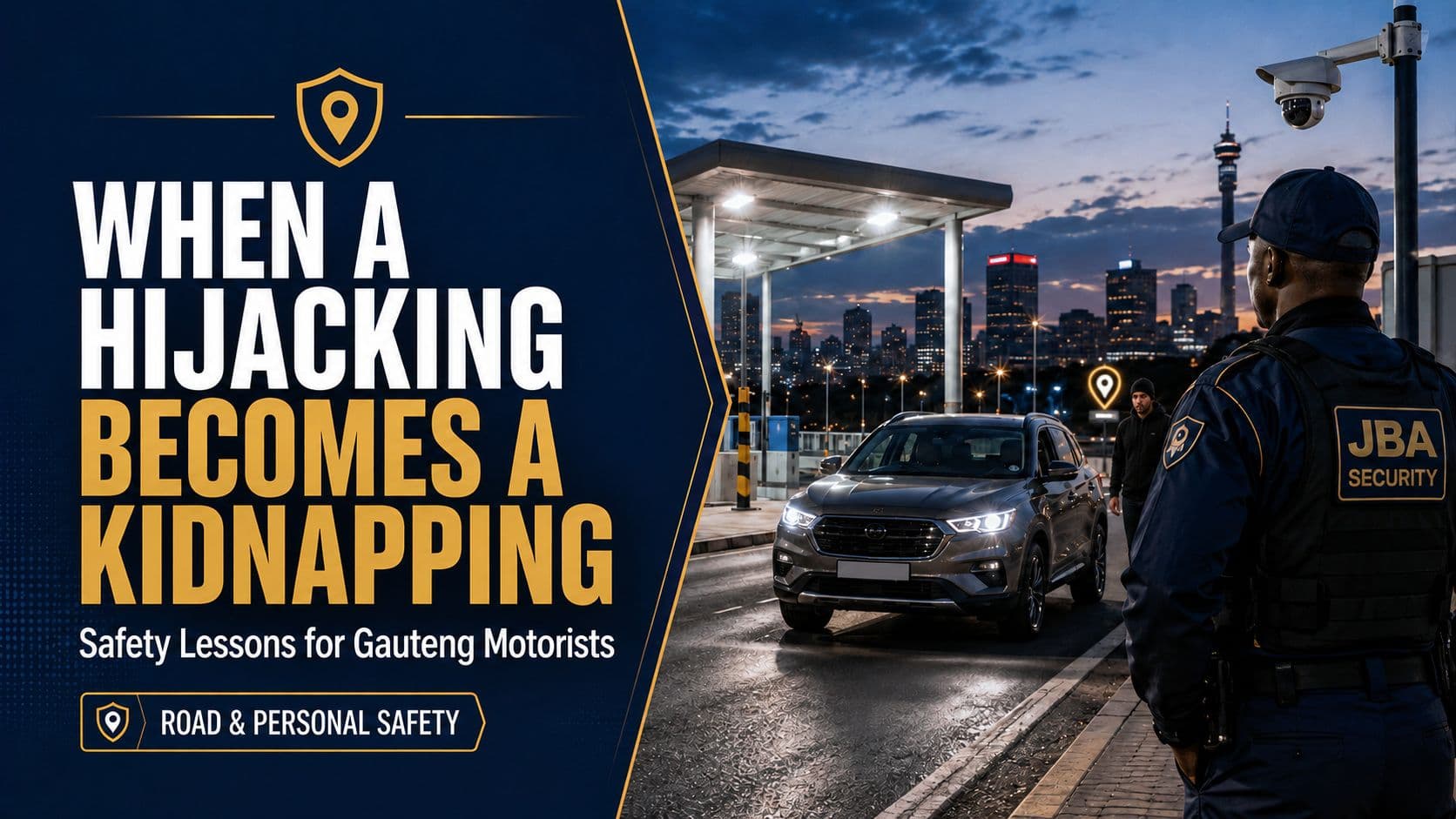
A hijacking is frightening on its own. When victims are forced to remain with attackers, the danger becomes even more serious.
That risk came into focus after a reported incident in Tshwane on 21 August 2026. According to a news report based on police information, a man and woman were allegedly kidnapped during the hijacking of an Omoda in Centurion. The vehicle was later found abandoned in Atteridgeville. Police reportedly located another vehicle in the Soshanguve and R80 area, rescued both victims after a pursuit and arrested a 47-year-old suspect. The suspect appeared in the Pretoria North Magistrate's Court on 24 August. The allegations remain subject to the court process.
The incident should not be used to spread panic. It should prompt practical conversations about awareness, arrival routines and the actions that protect life when a vehicle-related crime escalates.
The places where routine can reduce awareness
Motorists are often most relaxed close to home, at a school, at work or on a familiar route. Attention shifts to a gate remote, a phone call, children in the car or the next task. Criminals may take advantage of predictable moments, including when a vehicle slows or stops.
No routine can remove all risk, and victims are never responsible for the crimes committed against them. The purpose of preparation is to give people simple choices they can recall under pressure.
Before you reach your gate or driveway
Look beyond the gate
As you approach, scan the road, pavement, vehicles behind you and the entrance itself. If something feels wrong, continue driving to a busy, staffed location or a police station where it is safe to do so. Do not lead a suspicious vehicle to your home.
Prepare early
Have the access method ready before reaching the entrance. Searching for a remote, tag or phone while stationary divides attention and increases waiting time.
Keep sensible space
In traffic or at a gate, allow enough room to move away if conditions change, without driving recklessly. Avoid parking so close to the vehicle ahead that you have no safe option.
Reduce predictable delays
Residents should report malfunctioning gates, poor lighting and slow access processes. Estates can review peak-time queues and visitor procedures without weakening verification.
If you think you are being followed
Do not drive home to test the suspicion. Stay calm, keep the doors locked and windows closed, and travel toward a busy, well-lit place with visible people or security. If possible, call emergency services or a trusted person hands-free. Avoid sudden manoeuvres that could cause a collision.
If the vehicle continues following you, note what you safely can — such as colour, type, direction and location — but do not use your phone to film while driving.
During a hijacking: life before property
Every incident is different, and no checklist can guarantee safety. In general, personal survival matters more than the vehicle or belongings.
Try to remain as calm as possible. Avoid sudden movements, arguments, threats or physical resistance. Tell the attacker before reaching for a seat belt or opening a door so the movement is not misunderstood. Follow clear instructions where doing so does not create a greater immediate danger.
If children are in the vehicle, communicate that calmly and clearly. If you can leave the vehicle safely, move away without chasing the attackers. Once you are safe, contact SAPS and the relevant emergency or tracking service.
Why access control and patrol visibility matter
An entrance is not protected simply because it has a boom or gate. Effective security depends on layered measures working together:
- Adequate lighting and clear sightlines
- Trained guards who remain observant during busy periods
- CCTV coverage that records usable images
- Reliable communication between guards, control rooms and patrols
- Visitor verification that does not create unmanaged queues
- Incident records that help identify recurring times and locations
For commercial parks and estates, patrol data can also help managers understand whether routes and response coverage match actual risks. Technology is most useful when it supports a disciplined operating procedure.
Build a family or workplace safety plan
A basic plan should include emergency contacts, vehicle and tracker information, and an agreed person to call. Families can decide who will handle children or vulnerable passengers during an emergency. Businesses should ensure that employees who drive company vehicles know the reporting sequence after an incident.
Keep important information somewhere accessible after a phone or vehicle is lost. Do not publish travel routines, home addresses or live locations openly on social media.
After an incident
Get to a safe place and contact SAPS as soon as possible. Notify the tracking company and insurer through their official channels. Write down details while they are fresh, but do not put yourself in danger to collect evidence. Seek medical attention when needed and consider emotional support for everyone involved; a frightening incident can affect people differently.
The most important message is simple: awareness should create options, not fear. A calm routine, layered property security and a clear emergency plan can make motorists and communities better prepared.
JBA Security supports residential estates and commercial sites with professional guarding, patrol oversight, CCTV and controlled access — old-school discipline strengthened by modern security technology.
Frequently asked questions
Should I drive home if I think a vehicle is following me?
No. Where it is safe to do so, continue to a busy, staffed location or police station and contact emergency services or a trusted person.
Should a motorist fight to protect the vehicle?
Property can be replaced; life cannot. Avoid confrontation and sudden movements, and prioritise getting yourself and passengers to safety.
What should estates review after a nearby hijacking?
Review lighting, sightlines, CCTV quality, entrance queues, guard communication, patrol coverage and the incident-reporting process.
Is your entrance security working as one system?
JBA Security can help estates and commercial properties review guarding, access control, CCTV visibility and patrol procedures as connected layers of protection.
More Insights
That Online Bargain Could Be a Trap: How South Africans Can Shop More Safely
A price that looks too good to be true can cost far more than expected. Following a recent SAPS warning in Tshwane, here are practical checks every online shopper should know.
Read More →Extortion Is Not Only a Big-Business Problem: What Western Cape Owners Should Know
A multi-agency operation and four arrests have put extortion back in the spotlight. Here is what Western Cape owners, managers and staff should know before a demand arrives.
Read More →New PSiRA Reporting Rules: Why Your Security Provider's Payroll Records Matter to Your Estate
Since 1 April 2026, PSiRA-registered security businesses must submit detailed monthly workforce, deployment and payroll information. We explain what changed, why it matters to your property, and the compliance documents an HOA or procurement team should request from any guarding provider.
Read More →Is Your Current Security Provider Truly Accountable?
Book a no-obligation site security assessment with JBA Security.