
"Shrinkage" — inventory loss that isn't explained by legitimate sales or use — is one of the hardest security problems to solve, because it's often invisible until a stock count reveals it, by which point the loss has usually already happened repeatedly.
It helps to be honest about where shrinkage actually happens. External theft — break-ins, perimeter breaches — gets the most attention, but internal shrinkage, involving employees, contractors or delivery drivers, is consistently the larger share of the problem across the logistics industry. An effective site security plan has to address both, not just the more visible external threat.
Access control matters most when it's applied at the right granularity. Not every warehouse worker needs access to every zone. Segmenting access by role — loading bay versus stock floor versus office — and logging every entry makes it possible to narrow down when and where a loss occurred, rather than treating the whole site as one undifferentiated space after the fact.
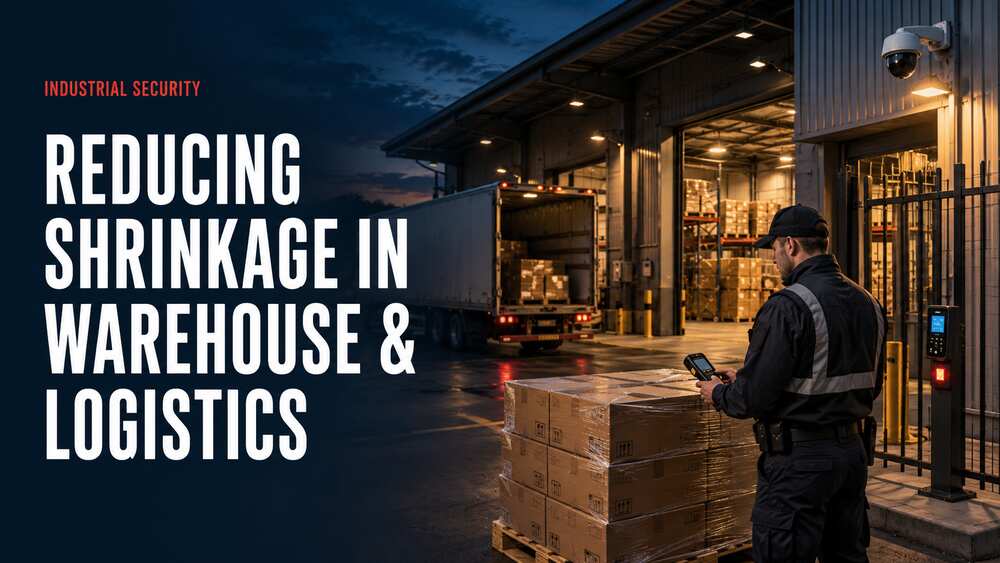
The loading bay is consistently the highest-risk point on most sites. Most shrinkage in logistics environments happens at the interface between the site and the outside world — during loading and offloading, when goods are briefly outside normal stock-control systems. This is where camera coverage, checker sign-off processes and direct guard presence matter most, more than anywhere else on site.
Patrol consistency matters more than patrol frequency. An unpredictable, well-documented patrol pattern deters opportunistic theft far more effectively than a fixed, predictable one — if staff or outsiders can predict exactly when a guard will or won't be in a given area, that predictability itself becomes the vulnerability.
Reducing shrinkage is rarely about simply adding more guards. It's about making sure the guards, cameras and access systems already in place are actually covering the real points of loss — which requires an honest, site-specific assessment rather than a generic checklist applied the same way everywhere.
Frequently asked questions
What is shrinkage in a warehouse or logistics operation?
Inventory loss that isn't explained by legitimate sales or use. It is one of the hardest security problems to solve because it is often invisible until a stock count reveals it, by which point the loss has usually already happened repeatedly.
Is most warehouse theft internal or external?
Internal shrinkage — involving employees, contractors or delivery drivers — is consistently the larger share of the problem across the logistics industry, even though external theft such as break-ins and perimeter breaches gets the most attention. An effective plan has to address both.
Where on a site does most shrinkage happen?
The loading bay. Most shrinkage in logistics environments happens at the interface between the site and the outside world, during loading and offloading, when goods are briefly outside normal stock-control systems. That is where camera coverage, checker sign-off and direct guard presence matter most.
How should access control be set up in a warehouse?
At the right granularity. Not every worker needs access to every zone. Segmenting access by role — loading bay versus stock floor versus office — and logging every entry makes it possible to narrow down when and where a loss occurred, instead of treating the whole site as one undifferentiated space after the fact.
Will adding more guards reduce shrinkage?
Rarely on its own. It is usually about making sure the guards, cameras and access systems already in place actually cover the real points of loss, which requires an honest site-specific assessment rather than a generic checklist.
Does patrol frequency or patrol consistency matter more?
Consistency. An unpredictable, well-documented patrol pattern deters opportunistic theft far more effectively than a fixed one. If staff or outsiders can predict exactly when a guard will or will not be in an area, that predictability is itself the vulnerability.

About JBA Security
JBA Security is a locally owned, PSIRA-registered (1685942) security company protecting estates, business parks, industrial and development sites across the Western Cape and Gauteng since 2008. The business is led by director Johan Brits, who served 23 years in the South African Police Service.
Old-school discipline. Modern security technology.